
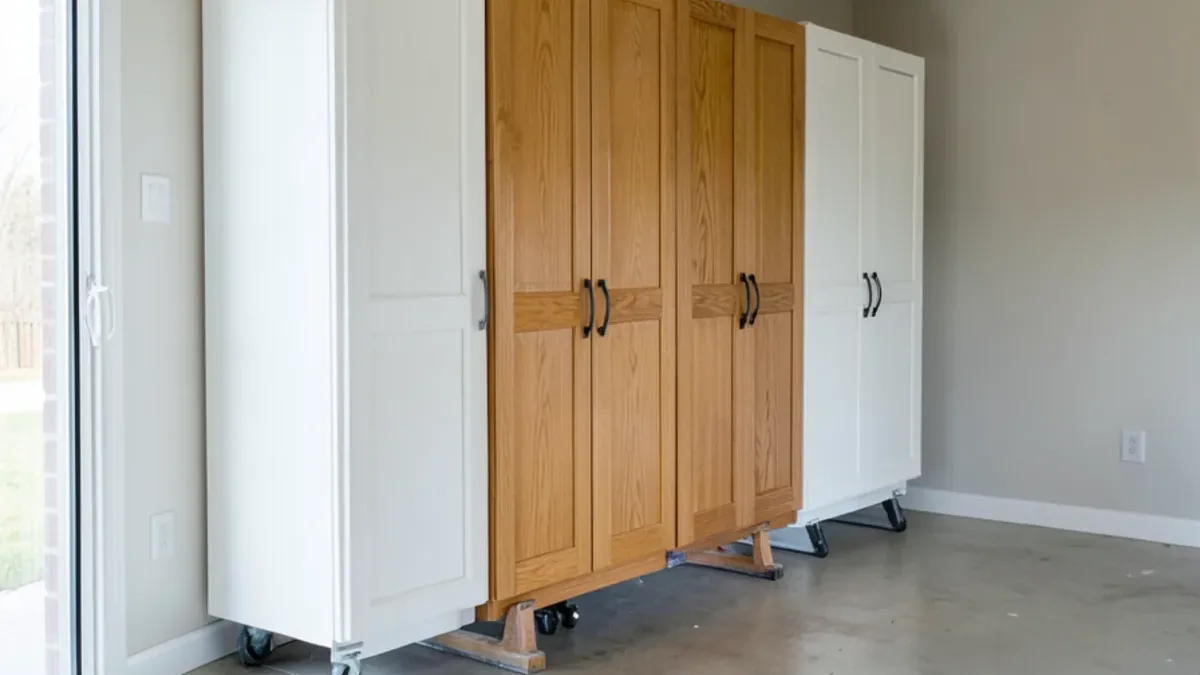
Painting oak kitchen cabinets works well when the prep is done in the right order: degrease, sand, fill the grain if you want it gone, prime with a stain-blocking primer, then spray a durable cabinet topcoat. Most peeling paint on oak traces back to grease left on the doors or a primer that never gripped the old finish.
Why Does Paint Peel Off Oak Cabinets?
Paint peels when it sits on top of the old finish instead of bonding to it. Oak cabinets from the 1970s through the 1990s usually carry a hard, slick factory varnish, and years of cooking add a film of grease and hand oils on top.
The common failures we see:
- Grease contamination. Paint will not stick to the area around handles, the range hood and the trash pull-out unless it is thoroughly degreased.
- No scuff sanding. Glossy varnish gives paint nothing to grip.
- Wrong primer. Some general wall primers do not bond well to factory varnish, and water-based primers can let oak tannins bleed through as yellow-brown blotches.
- Brushing wall paint. Wall paint stays soft and blocks, meaning doors stick to frames.
Red Oak, White Oak and Why the Grain Shows Through
Most builder-grade honey oak cabinets from that era are red oak, and the species matters for paint. Red oak's pores stay open like tiny straws, while in most white oak species the pores are largely plugged by growths called tyloses. Open pores show as lines of pits under a thin coat of paint, so red oak needs more filling to look smooth.
Oak is also rich in tannins, water-soluble compounds that move toward the surface when a water-based coating wets the wood. That is the yellow-brown bleed people see through white paint a day after the first coat. A stain-blocking primer locks the tannins in before any water-based topcoat goes on.
Planning a Kitchen Cabinets Project?
Six Design Group designs and builds kitchens, baths and floors from Lake Highlands. Call to talk through your home and get a written scope.
- 34 Google reviews
- Design and build under one team
- Based in Lake Highlands, Dallas
- Mon–Fri 9 am–5 pm
Prep Steps for Painting Oak Kitchen Cabinets
Prep is roughly two-thirds of a cabinet painting job, and the order matters. This is the sequence for a finish that lasts.
- Remove and label. Take off doors, drawer fronts and hardware, and number each piece to its opening.
- Degrease. Wash every surface with a degreasing cleaner, then rinse with clean water so no residue remains.
- Repair. Fill dents and old hardware holes if you are changing pull sizes.
- Scuff sand. Sand the old finish to a dull, even surface, then remove all dust.
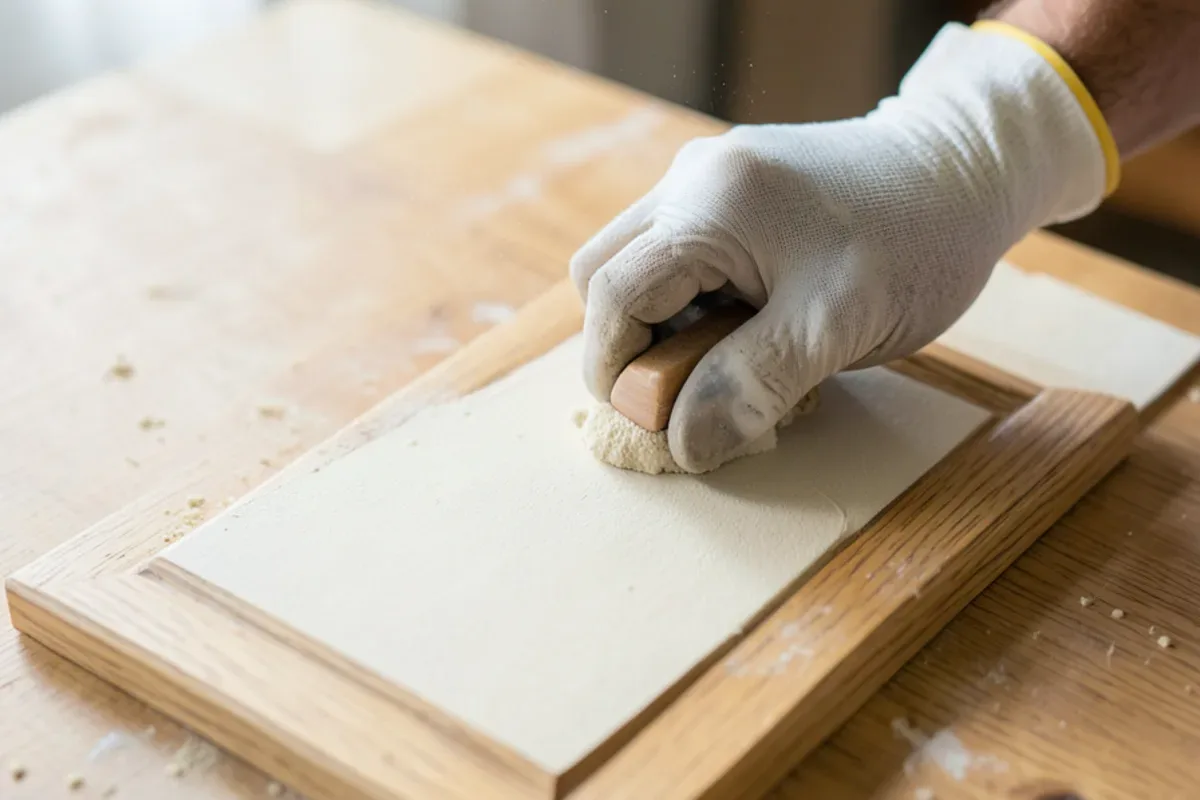
- Fill the grain (optional). Apply a grain filler to the oak, let it dry and sand it flat. This is what makes painted oak look like smooth painted maple.
- Prime. Use a bonding, stain-blocking primer suited to varnished wood. Shellac-based and oil-based primers are traditional choices for stopping oak tannin bleed.
- Spray the topcoat. Two thin coats of a cabinet-grade enamel or urethane-modified finish, lightly sanded between coats.
The cabinet painting service page covers what is included when we paint a kitchen, from prep to the final walkthrough.
Choosing a Primer for Varnished Oak
| Primer type | Tannin blocking | Dry and sand time | Trade-off |
|---|---|---|---|
| Shellac-based | Strongest | Fast, often sandable within an hour | Strong alcohol odor; needs ventilation |
| Oil-based bonding | Strong | Slow, usually overnight | Solvent odor and slower cleanup |
| Waterborne bonding | Moderate; may need two coats on oak | Moderate | Low odor, but bleed is more likely |
Test Adhesion Before You Paint a Whole Kitchen
A five-minute tape test on one door saves a kitchen from peeling. Prime the back of a door with the full prep, let it dry, then score a small grid through the primer with a utility knife. Press painter's tape firmly over the grid and pull it off fast. Clean edges mean the primer has gripped; flakes on the tape mean the degreasing or sanding was not enough. This mirrors the cross-hatch tape method coatings labs use to rate adhesion.
Grain Showing Through: Fill It or Keep It?
Decide on grain before work starts, because it changes the labor. Oak has large open pores, and paint alone does not hide them. Three coats of primer and paint will soften the texture but not erase it.
Here is how the choice usually plays out:
| Approach | Look | Effort |
|---|---|---|
| Paint without filling | Visible oak texture under the color | Standard prep |
| Partial fill (faces only) | Smooth fronts, textured frames | Moderate |
| Full grain fill | Smooth, furniture-like surface | Significant extra labor |
A textured finish can look good on a farmhouse or cottage kitchen. On a modern slab-style look, most people prefer full filling.
Sprayed Finish vs Brushed Finish
A sprayed finish is smoother and tougher than a brushed one, and it is the standard for cabinet work. Spraying lays down thin, even coats without brush marks in the corners of raised panels, where brushed paint tends to pool and crack.
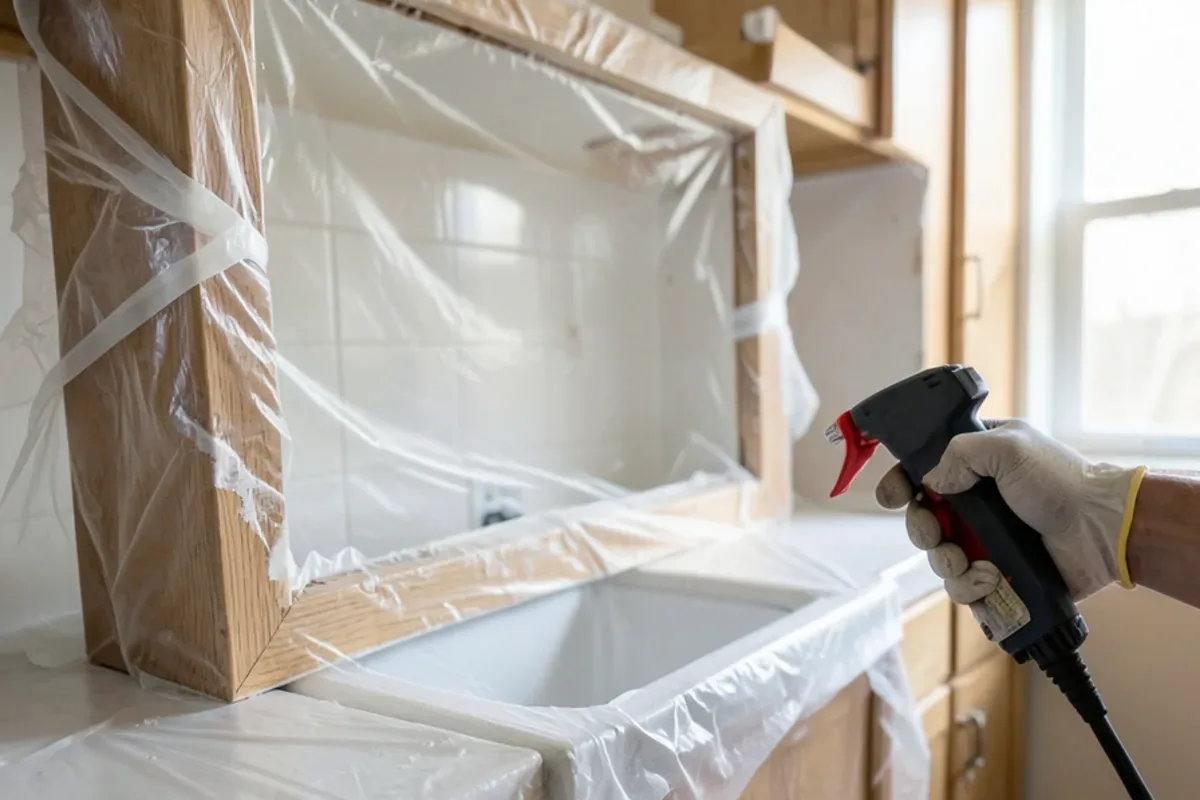
Doors and drawer fronts are best sprayed off site or in a contained area, flat or hung, so the finish levels out. Face frames are sprayed in place after masking the countertops, walls, floors and appliances. Brushing has a place for small touch-ups, but a full kitchen brushed by hand will show it.
Weather affects sprayed waterborne enamels more than people expect. A closed Dallas garage in summer can run hotter than the upper limit printed on many coating labels, and very hot, dry air makes the spray dry before it levels, leaving a gritty texture. Humid spring weather has the opposite effect and slows drying between coats. Read the product's label for its temperature and humidity window, and plan spraying for the cooler part of the day.
Hardware matters too. If you switch from the old center knobs to longer bar pulls, the old holes need filling before primer, and the new holes are drilled with a template after the finish cures.
What Our Project Leads Check Before Painting Garland and Plano Cabinets
Our project leads look at three things before recommending paint. In Garland, many 1960s to 1980s brick ranch homes still have original oak cabinets, and their solid-wood doors usually paint well. In east and central Plano, neighborhoods such as Los Rios often have original 1970s to 1990s cabinets that are sound but dated, also good candidates.
What we check:
- Box condition. Paint will not fix a sink base swollen by a past leak. That cabinet gets replaced or rebuilt first.
- Earlier paint. If the cabinets were painted before and the home was built before 1978, old layers may contain lead. The EPA's Renovation, Repair and Painting rule then requires lead-safe work practices by a certified firm when that paint is disturbed.
- Who is doing the work. The EPA notes that homeowners working in their own pre-1978 home are generally exempt from the rule, but anyone paid to disturb that paint must work through a certified firm.
- Door style. Cathedral-arch doors look dated even when painted. If the style bothers you, new doors with painted frames may be the better spend, which our post on cabinet refacing vs replacement covers.
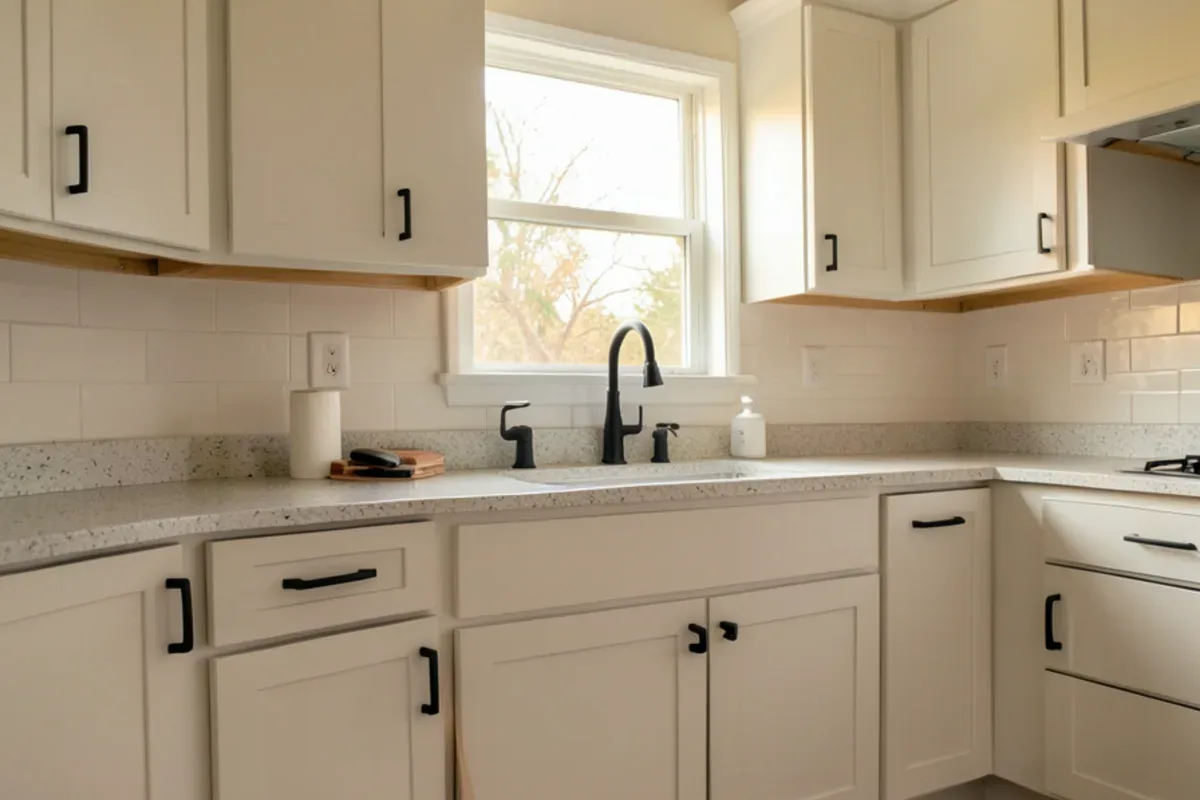
The honest trade-off is durability. A well-prepped painted finish is harder than wall paint, but it is still a film on top of wood, and it chips at the edges of doors that get bumped by pots and chair backs. Stained oak hides wear; paint shows it. For a household that cooks hard every day, we sometimes suggest painting the uppers and refacing or replacing the most-used base doors in a tougher finish.
Painting Oak Cabinets Done Right
Painted oak holds up for years when the doors are degreased, sanded, primed with a bonding stain-blocker and sprayed, and when the finish is allowed to cure before heavy use. Shortcuts at any of those steps show up as peeling around handles within months.
For a full scope of what is included, visit our cabinet painting page, or see all of our kitchen cabinet services if you are still deciding between paint, refacing and new cabinets.
Quick Answers on Painting Oak Kitchen Cabinets
Can the oak grain be completely hidden under paint?
How long before I can use the kitchen after cabinet painting?
Should I paint the cabinet boxes too, or only the doors?
Can I paint oak cabinet doors in a garage during a Dallas summer?
Sources

Written by the Six Design Group team
Design-build remodelers based in Lake Highlands, Dallas. We plan and build kitchens, bathrooms, floors and whole-home remodels across Dallas-Fort Worth.