
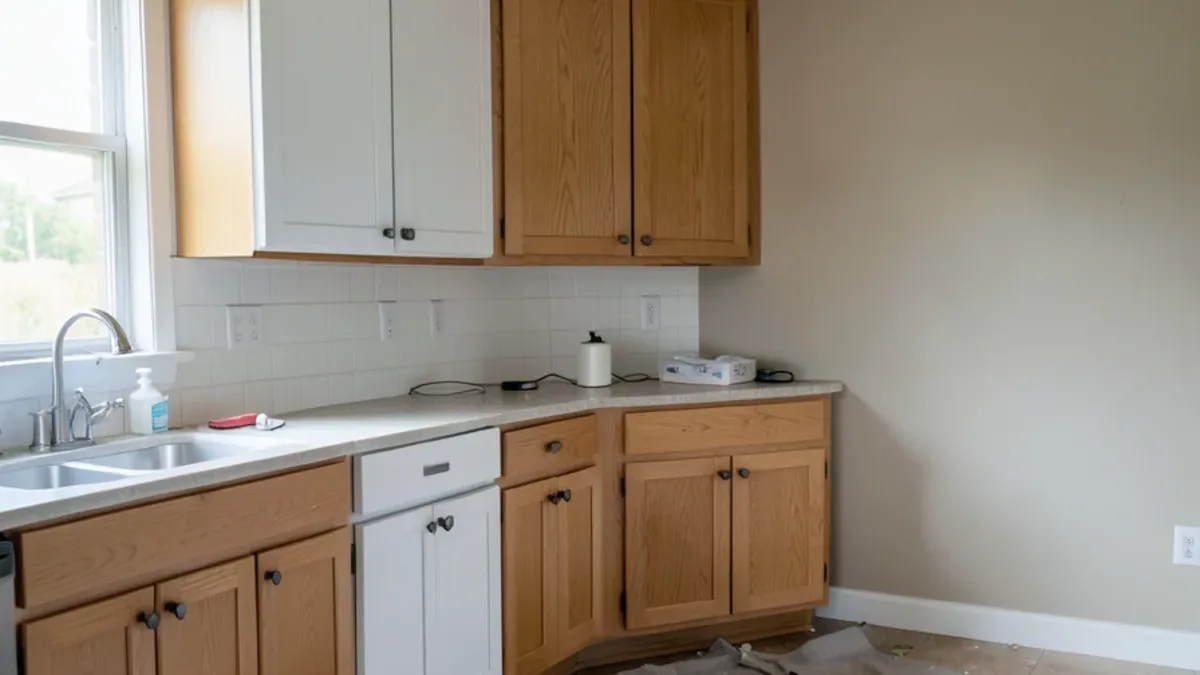
Cabinet refacing vs replacement comes down to one question: are your cabinet boxes and your layout worth keeping? If the boxes are solid and the sink, range and refrigerator sit where you want them, refacing gives you a new look for less money and disruption. If the boxes are damaged or the layout fails you, only new cabinets help.
What Changes With Refacing, and What Stays?
Refacing replaces everything you see and keeps everything you don't. The cabinet boxes, shelves and usually the countertops stay in place. The visible parts are renewed:
- New doors and drawer fronts in the style you choose, such as shaker, slab or raised panel
- Veneer or thin plywood applied over the face frames and exposed end panels
- New hinges, drawer slides where needed, and new pulls
- Matching toe-kick, crown and filler trim
Because the boxes stay, there is no demolition, and the kitchen is usually usable most evenings during the work. You can read the full scope on our cabinet refacing service page.
Which Refacing Surface Should You Choose?
The skin you put on the face frames decides how the refaced kitchen ages. Three materials cover most jobs, and each behaves differently around heat and water:
| Surface | What it is | Strength | Watch-out |
|---|---|---|---|
| Wood veneer | A thin slice of real wood on a paper or plywood backer, stained or painted | Matches solid-wood doors; can be refinished later | Needs a sealed finish; raw edges soak up water |
| Rigid thermofoil (RTF) | Vinyl film heat-pressed over MDF doors | Easy to wipe, uniform color | Heat from a self-cleaning oven or toaster can lift the film |
| High-pressure laminate | Layered resin sheet glued to the frame and doors | Tough surface, strong for flat slab looks | Chips at edges are hard to repair invisibly |
Ask which backer the veneer uses. A plywood-backed veneer bridges small dents in old frames better than paper-backed sheets, which telegraph every flaw underneath.
Planning a Kitchen Cabinets Project?
Six Design Group designs and builds kitchens, baths and floors from Lake Highlands. Call to talk through your home and get a written scope.
- 34 Google reviews
- Design and build under one team
- Based in Lake Highlands, Dallas
- Mon–Fri 9 am–5 pm
When Does Full Cabinet Replacement Make More Sense?
Replacement wins whenever the problem lives inside the box or in the floor plan. New veneer does not cure a box that is failing, and it cannot move a wall of cabinets three feet to the left.
Choose new cabinets when you see:
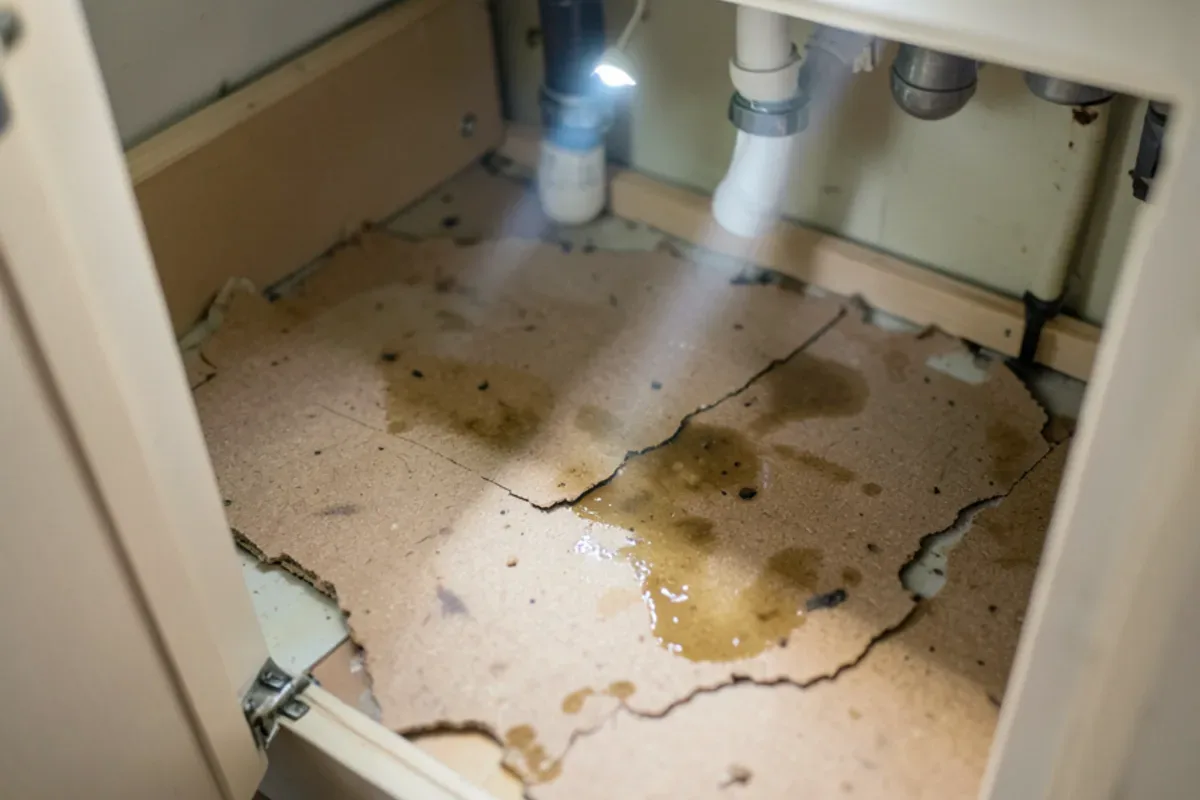
- Water damage. Swollen particleboard under the sink or beside the dishwasher will keep crumbling under new faces.
- A layout you fight every day. No landing space beside the refrigerator, a dead corner, or a range jammed against a wall.
- Boxes that are out of square. Doors that never hang straight on the old frames will not hang straight on new ones.
- A plan to open the kitchen. Removing a wall or adding an island changes cabinet sizes and positions.
- Storage that stops short of the ceiling. If you want cabinets to the ceiling instead of a soffit, new uppers are part of the job.
Built-to-measure custom cabinets also let you size every box to the room, which matters in older homes where walls are rarely straight.
Cabinet Refacing vs Replacement: Cost, Time and Disruption
Refacing usually costs noticeably less than new cabinets because the boxes, the countertops and often the plumbing never move. Exact pricing depends on door style, veneer species, the number of doors and drawers, and any cabinets that must be swapped. The table compares the two in relative terms.
| Factor | Refacing | Full replacement |
|---|---|---|
| Relative cost | Lower; you pay for doors, fronts, veneer and hardware | Higher; new boxes, tear-out and often new countertops |
| Layout changes | Minor swaps only | Anything the room and budget allow |
| Countertops | Usually stay in place | Usually replaced, since old tops rarely survive removal |
| Kitchen downtime | Days, often usable in the evenings | Weeks, with a temporary kitchen |
| Fixes box damage | No | Yes |
| Permits | Rarely needed for refacing alone | Needed when plumbing, electrical or walls change |
Replacement also adds costs people forget: new stone almost always follows new cabinets, and the floor where old cabinets sat may need patching. Our guide to custom cabinet cost in Dallas walks through those drivers in detail.
How the Two Jobs Run in a Lived-In House
The sequence explains the difference in disruption. A refacing job typically runs like this:
- Measure every opening and confirm which boxes stay, which get swapped and which get new drawer bases.
- Order doors and fronts, which sets most of the wait; the kitchen works normally meanwhile.
- Remove doors, drawer fronts and hardware, then clean and lightly sand the frames so adhesive bonds.
- Apply veneer or laminate to face frames and exposed ends, trimming each edge by hand.
- Hang new doors and fronts, set hinges and slides, and adjust the reveals until gaps run even.
- Add trim and pulls, then walk the kitchen and tune any door that rubs.
Replacement adds tear-out, countertop removal, wall and floor repair, possible plumbing and electrical changes with inspections, new cabinet installation and a countertop template before the stone is cut. That is why the kitchen is out of service for weeks rather than days.
How to Check Whether Your Boxes Are Worth Refacing
Spend ten minutes with a flashlight before you get quotes. Box quality tells you more than door style does.
Look for these signs of a good refacing candidate:
- Box material. Plywood or solid-wood sides hold screws and veneer well. Particleboard can work if it is dry and intact.
- Face frames. Refacing is designed for face-frame cabinets. Frameless European-style boxes can take new doors, but there is no frame to veneer.
- Joinery. Drawer boxes with dovetailed or doweled corners are worth keeping; stapled boxes may need replacing even if the cabinets stay.
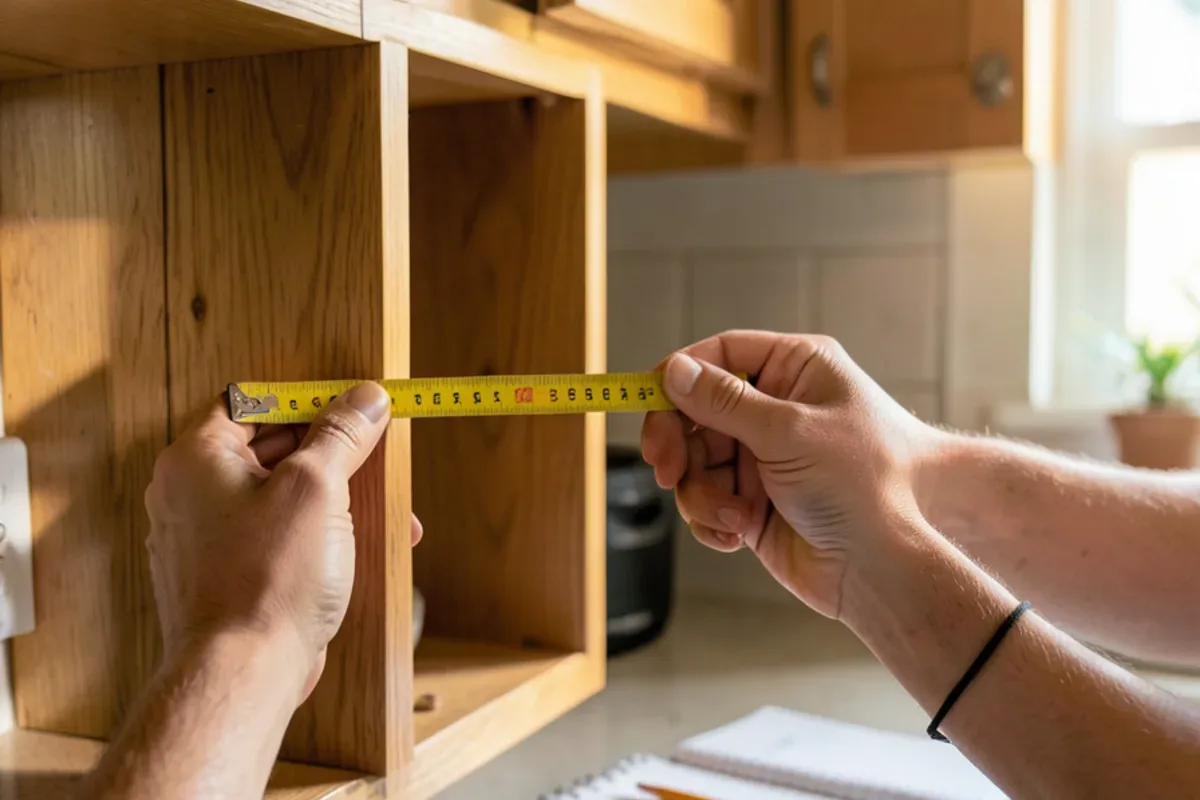
- Square openings. Measure the diagonals of a few door openings. Matching numbers mean the frame is square.
Out-of-square frames are common in North Texas for a reason. The Blackland Prairie clay under most Dallas-area slabs swells when wet and shrinks in drought, and a slab that has moved can rack a long cabinet run. If the diagonals differ by more than a small amount, or the countertop has a visible dip, have the foundation looked at before you spend money on new faces.
If you are weighing a third option, painting the existing doors, our post on painting oak kitchen cabinets explains when paint holds up and when it peels.
What We See in Garland and Richardson Kitchens
Our project leads find that the age of the house often decides the answer before anyone opens a sample book. In Garland, many 1960s to 1980s brick ranch homes still have their original oak cabinets. Those boxes are frequently solid wood with sturdy face frames, which makes them strong refacing candidates when the layout is tolerable.
In Richardson, mid-century neighborhoods such as Richardson Heights tend to have smaller, closed kitchens. Owners there more often want to open a wall or add an island, and that pushes the project toward new cabinets.
Two patterns come up again and again:
- The sink base is the weak spot. Even when the rest of the kitchen is sound, we often replace that one cabinet and reface the others to match.
- Soffits hide ductwork or plumbing. Removing them to run cabinets to the ceiling is a replacement job, and what sits inside the soffit decides the cost.
- Old paint changes the prep. Many houses in both cities were built before 1978, and under the EPA Renovation, Repair and Painting rule, sanding or scraping more than six square feet of painted surface per room in those homes calls for lead-safe work practices by a certified firm. Painted original cabinets get tested before anyone sands them.
The honest trade-off: refacing saves money and weeks, but it locks in the old box sizes, the old soffit and the old toe-kick height for another decade or two. If you already wish the kitchen worked differently, refacing only makes that kitchen prettier.
When new cabinets are part of the plan, ask about box construction. The Kitchen Cabinet Manufacturers Association (KCMA) certification puts cabinets through 14 third-party tests, including a 600-pound load test, and KCMA says roughly 40% to 50% of manufacturers fail their first attempt. Hardwood plywood, MDF and particleboard, plus finished goods that contain them, must meet EPA formaldehyde emission standards under TSCA Title VI, and covered products have carried a TSCA Title VI compliance label since March 22, 2019 (U.S. EPA). Ask any supplier for both.
Making the Call
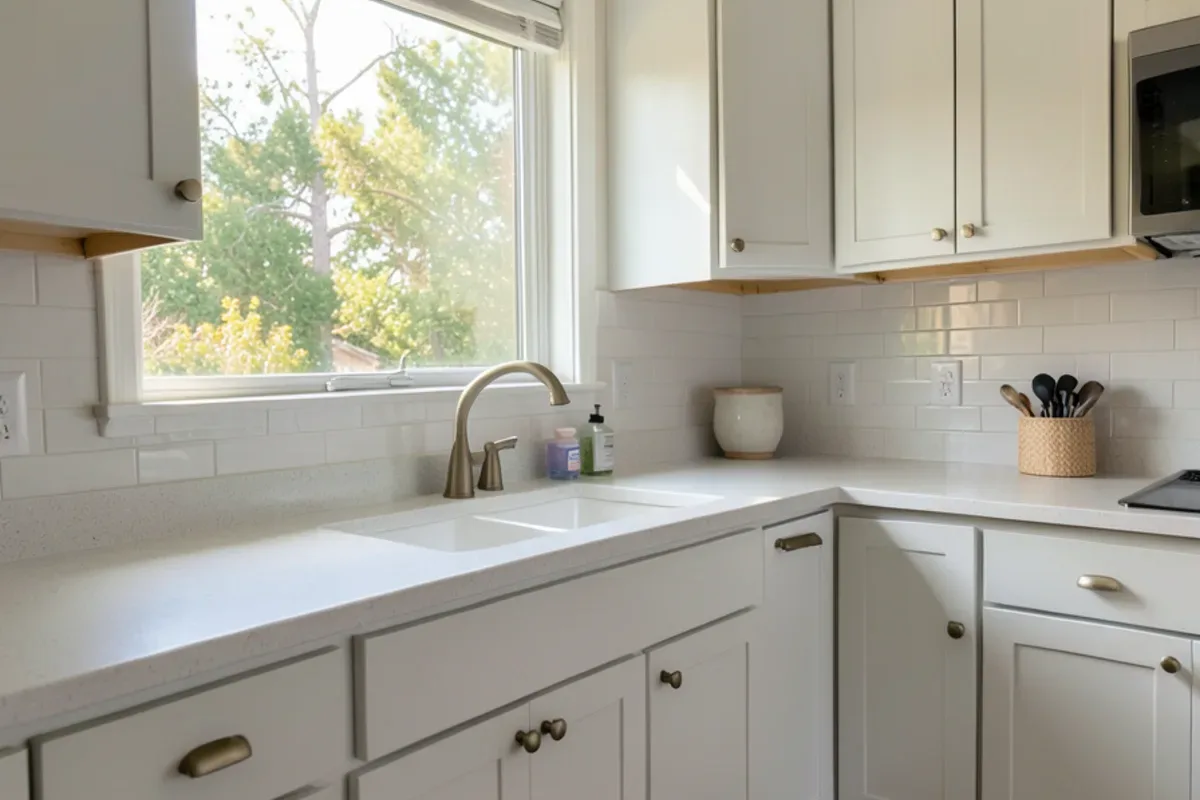
Reface when the boxes are dry, square and in the right places, and your goal is a new look. Replace when you need to fix damage, move things or add storage that the old boxes cannot hold. Many kitchens end up as a mix: one or two new cabinets, the rest refaced to match.
Run this five-point check before you request quotes. Every "yes" points toward refacing:
- The sink base and dishwasher sides are dry and firm.
- Door-opening diagonals match within a small margin.
- The sink, range and refrigerator can stay where they are.
- You can live with the current upper cabinet height and soffit.
- The countertop is one you want to keep for years.
Two or more "no" answers usually mean new cabinets are the better spend.
Our kitchen cabinets team can look at your boxes, layout and goals in one visit and tell you honestly which path fits. Schedule a consultation and bring your list of what bothers you most about the kitchen today.
Quick Answers on Cabinet Refacing Vs Replacement
How do I know if my cabinet boxes are sound enough to reface?
Can I change the layout if I reface?
Do the countertops have to come off for refacing?
Which refacing material holds up best next to a range or dishwasher?
Sources
Written by the Six Design Group team
Design-build remodelers based in Lake Highlands, Dallas. We plan and build kitchens, bathrooms, floors and whole-home remodels across Dallas-Fort Worth.