
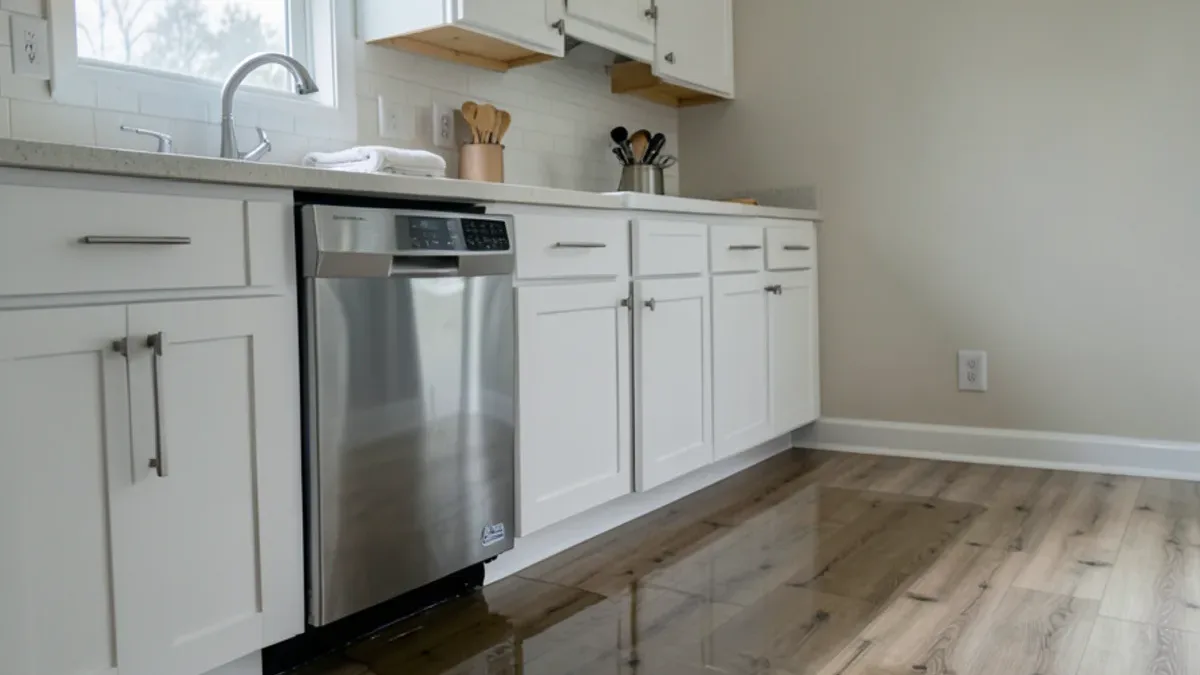
If your kitchen flooded, here is what to do first: stop the water, make the area safe, photograph everything, and get drying started within a day or two. The first 48 hours decide how much of the kitchen can be saved, because the U.S. EPA advises drying water-damaged areas within 24 to 48 hours to prevent mold growth.
The First Hour: Stop the Water and Stay Safe
Shut off the water before anything else. Most kitchen leaks come from a sink supply line, the dishwasher, the refrigerator's ice-maker line or a drain under the sink, and each usually has a small shut-off valve. If you cannot find one or it will not turn, close the main shut-off where the water line enters the house.
Water and electricity do not mix. If water has reached outlets, appliances or a power strip, stay out of the water and switch off that circuit at the breaker panel if you can reach it from a dry spot. If you are unsure, wait for an electrician.
Planning a Water Damage Remodeling Project?
Six Design Group designs and builds kitchens, baths and floors from Lake Highlands. Call to talk through your home and get a written scope.
- 34 Google reviews
- Design and build under one team
- Based in Lake Highlands, Dallas
- Mon–Fri 9 am–5 pm
What to Do in the First 48 Hours
Once the source is stopped, work through this list. It protects the kitchen and your claim at the same time.
- Photograph and video everything before moving items: water on the floor, the leaking appliance, cabinet bottoms, toe kicks and baseboards.
- Call a licensed plumber to find and repair the source. In Texas, plumbing repairs must be done by a plumber licensed by the Texas State Board of Plumbing Examiners.
- Notify your insurance company and ask how they want the claim handled.
- Call a water mitigation company to extract standing water and set up drying equipment.
- Empty the lower cabinets and leave the doors open so air can reach the boxes.
- Move rugs, furniture and boxes off wet floors.
- Keep receipts for any purchases, hotel stays or meals out, in case your policy covers them.
- Save samples: a cabinet door, a piece of flooring, a spare tile. They make matching easier later.
Who Does What After a Kitchen Leak?
A water loss usually involves several specialists, and knowing who does what saves time on the phone:
- Plumber: finds and repairs the leak.
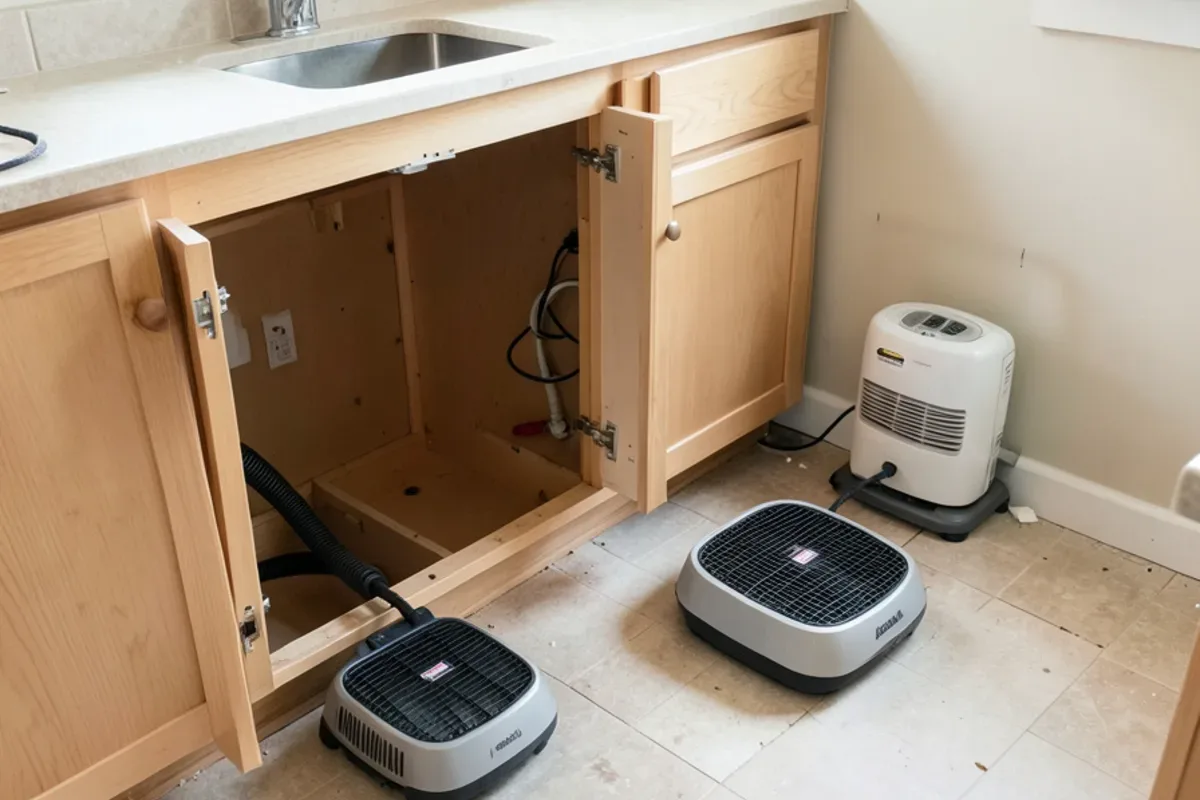
- Water mitigation company: extracts water, removes materials that cannot be dried, and dries the structure with air movers and dehumidifiers while tracking moisture readings.
- Licensed mold professionals, if needed: in Texas, mold assessment and remediation are licensed by the Texas Department of Licensing and Regulation. Larger mold jobs must use separate licensed assessors and remediators.
- Insurance adjuster: reviews the damage and the policy and writes an estimate.
- Rebuild contractor: that is where we come in, after drying, to replace cabinets, countertops, flooring and drywall.
We do not extract water or dry homes. We start once the space has been dried and the moisture readings confirm it.
Is Flood Water Different From a Leak?
Yes, and it matters for insurance. Water from inside the house, such as a burst line or dishwasher failure, is a different kind of loss from floodwater that comes in from outside. FEMA's National Flood Insurance Program notes that standard homeowners policies generally do not cover flood damage, which is why separate flood insurance exists.
Coverage for an inside leak depends on your policy and whether the water was sudden or a slow, gradual leak. The Texas Department of Insurance publishes plain-language guides for homeowners. Confirm your coverage with your insurer before you plan any rebuild.
Clean, Gray and Black Water
The source of the water also changes what can be kept. The IICRC S500 standard, which water mitigation companies work to, sorts water into three categories:
| Category | Typical kitchen source | What it usually means for the rebuild |
|---|---|---|
| Category 1, clean | A burst supply line, ice-maker line or faucet | More materials can often be dried and kept if drying starts fast |
| Category 2, gray | Dishwasher or washing machine discharge, a backed-up sink | Porous materials such as drywall, insulation and particleboard are more often removed |
| Category 3, black | Sewer backup or floodwater from outside | Porous materials in contact with the water are generally removed and replaced |
Restoration sources note that clean water can degrade to a worse category if it sits, which is one more reason the first 48 hours matter. The mitigation company sets the category; your rebuild scope follows from it.
What Can Be Saved After a Kitchen Flood?
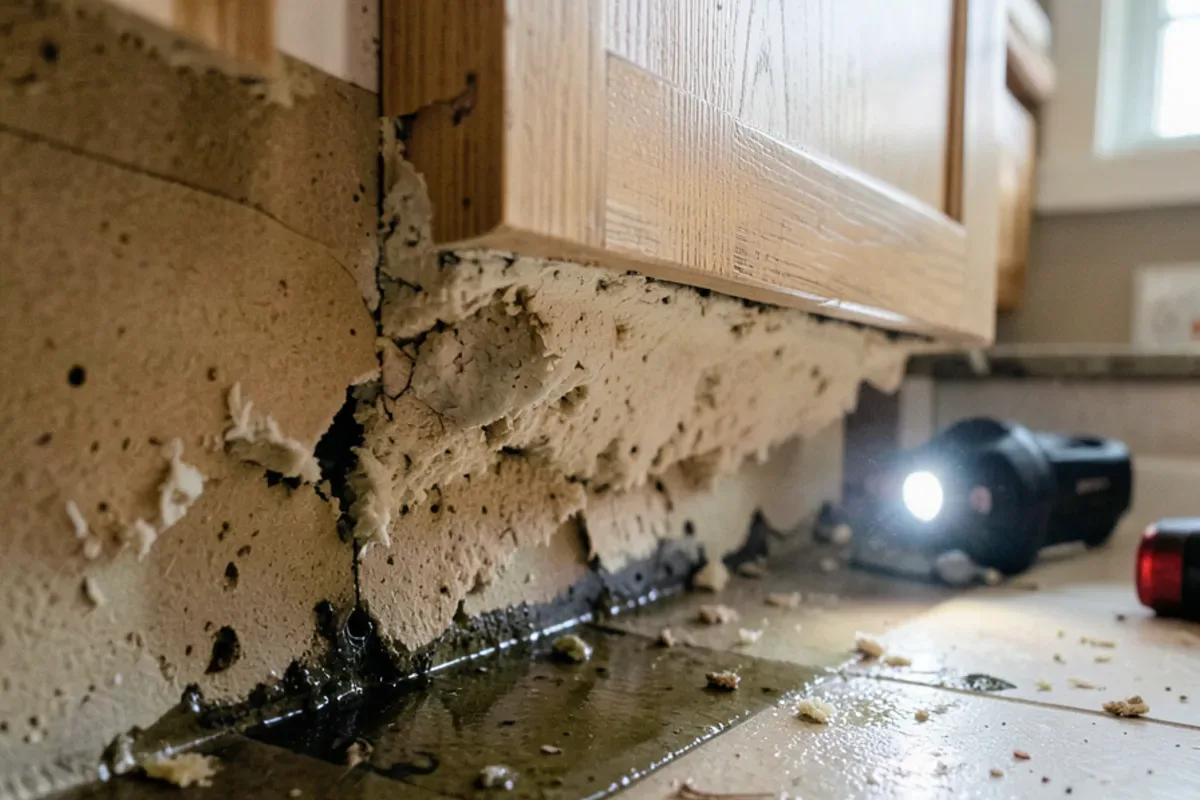
More than most homeowners expect, if the water was clean and drying started quickly. The answer is material by material:
| Material | Often saved when | Usually replaced when |
|---|---|---|
| Stone countertops | Cabinets below are removed carefully and the slab is supported | The slab cracks during removal or a seam fails |
| Laminate countertops | Rarely, since the core is usually particleboard | The core has swollen at the sink or edges |
| Plywood cabinet boxes | They dry flat and show no mold | Panels delaminate or stay soft |
| Particleboard cabinet boxes | Seldom | Bottoms or sides have swollen at all |
| Porcelain or ceramic tile | Tile and grout stay tight and the floor is dry beneath | Tiles sound hollow or water is trapped under them |
| Luxury vinyl plank | Planks can be lifted, the slab dried and the planks reset | Planks have curled or the underlayment held water |
| Laminate or engineered wood | Seldom after standing water | Edges swell or boards cup |
| Drywall | Water stayed low and drying was quick | The mitigation company makes a flood cut along the base of the wall |
Appliances are a separate call. Have a dishwasher, refrigerator or range that sat in water checked by a qualified technician before you use it again.
What We See When We Rebuild Dallas Kitchens
When our project leads walk a kitchen after drying, the most common surprise is how far water traveled. In many Dallas homes, water runs under continuous flooring into the dining room or hall, so a leak at the sink can mean new flooring across several rooms. Cabinets built with particleboard bottoms often swell even when the doors look fine.
In Garland and other neighborhoods with 1960s to 1980s brick homes, original cabinets can be hard to match, which makes saved samples especially useful. Victoria W., one of our customers, left a Google review about the kitchen remodel we did after a flood, handled through her insurance.
On any rebuild like that, clear photos and saved samples make the scope conversation simpler. They show the adjuster what was there, they let us order the right materials, and they settle questions about finish and color before anything is installed. Without them, decisions about matching often wait on guesswork.
The trade-off homeowners raise most is patching versus replacing a full run. Replacing two cabinets and keeping the rest costs less, but an exact match on an older finish is rare, and a mismatched countertop seam shows. We price both versions so you can see what the difference costs before deciding.
After the Home Is Dry: Planning the Rebuild
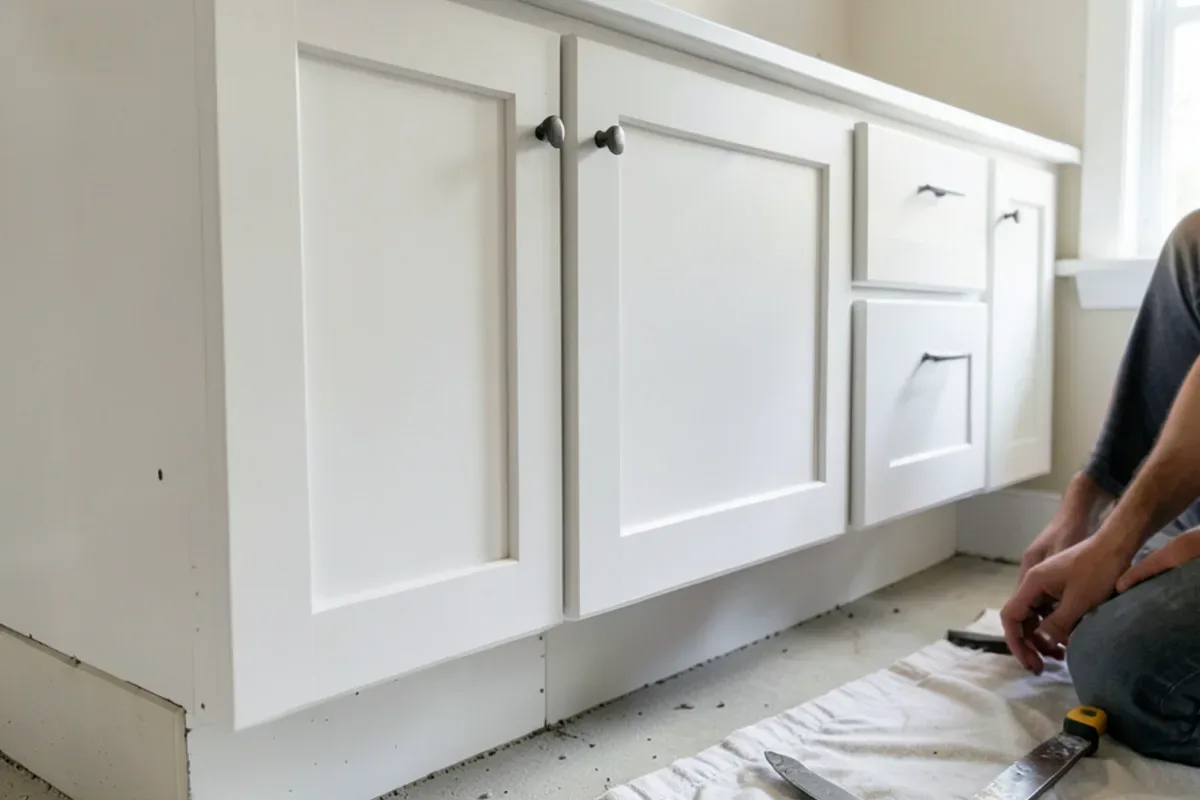
The rebuild starts with a scope. We measure, review the adjuster's estimate if you have one, and list what needs replacing and what you might choose to upgrade at your own cost. Matching existing cabinets and countertops is often the deciding factor between repairing one section and replacing a full run.
When the drying is done, our kitchen water damage repair process takes it from there. You can read more about how we approach water damage remodeling across the house, or call (239) 545-0550 to schedule a consultation.
Quick Answers on Kitchen Flooded What To Do
Should I start tearing out wet cabinets myself?
Do you handle water extraction and drying?
Is a kitchen flood covered by homeowners insurance?
Can stone countertops be saved when the cabinets under them are ruined?
Sources
- U.S. EPA, A Brief Guide to Mold, Moisture and Your Home
- FEMA National Flood Insurance Program (FloodSmart)
- Texas Department of Insurance
- Texas Department of Licensing and Regulation, Mold Assessors and Remediators
- Texas State Board of Plumbing Examiners
- IICRC, ANSI/IICRC S500 Standard for Professional Water Damage Restoration

Written by the Six Design Group team
Design-build remodelers based in Lake Highlands, Dallas. We plan and build kitchens, bathrooms, floors and whole-home remodels across Dallas-Fort Worth.