
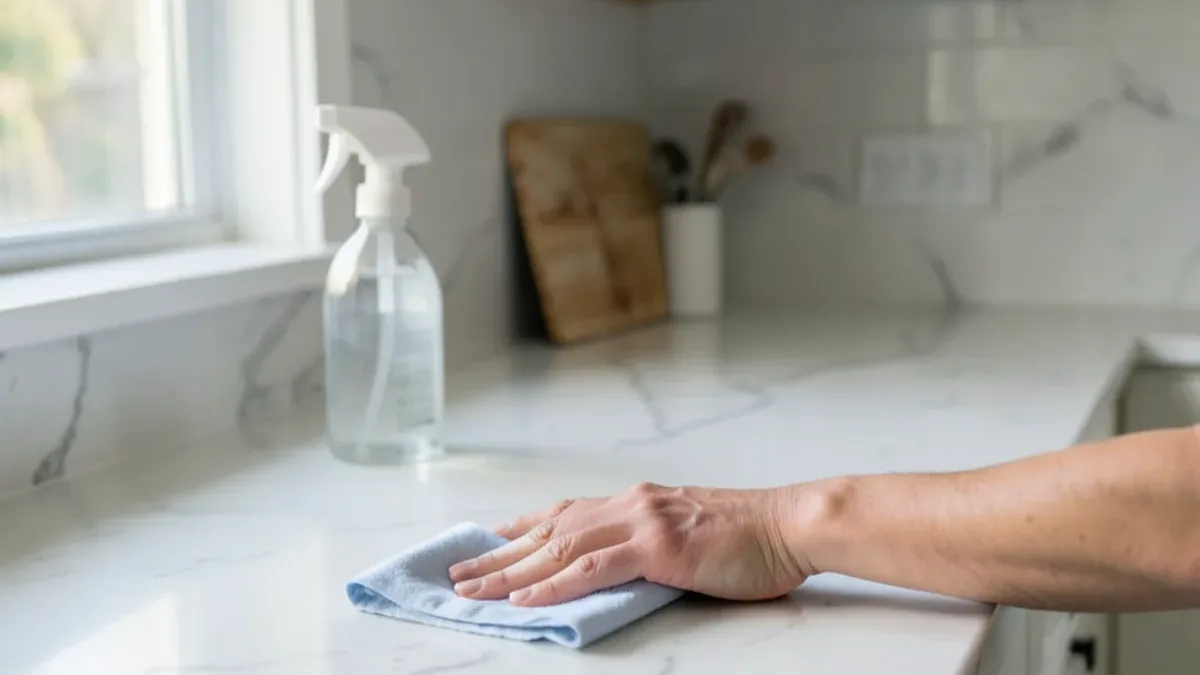
This countertop care guide comes down to three rules: clean every stone with a mild, pH-neutral cleaner, seal natural stone when a water test says it is time, and keep acids off marble. Quartz needs no sealing but dislikes high heat and harsh chemicals. Granite and quartzite need occasional sealing. Marble needs the most attention because acids etch its surface.
Daily Cleaning for Every Countertop
The same daily routine works for quartz, granite, marble and quartzite. Warm water, a few drops of mild dish soap and a soft cloth remove almost everything, and a dry towel prevents streaks.
Avoid these on all stone surfaces:
- Abrasive powders and scouring pads, which dull polished finishes
- Bleach, ammonia and oven cleaner used straight or repeatedly
- Vinegar, lemon juice and citrus-based cleaners on any natural stone
- Leaving standing water around the faucet, where minerals in hard water leave rings
The Natural Stone Institute recommends cleaners made for stone or a neutral soap solution, and blotting spills rather than wiping them across the surface.
Hard Water Rings Around the Faucet
Tap water left to dry on stone leaves a chalky ring of minerals, usually around the faucet base and the soap dispenser. Do not reach for a vinegar or acid descaler: it lifts the ring and etches marble or a soft quartzite in the same pass. The Natural Stone Institute's stain guidance is to buff water spots and rings with dry 0000 steel wool, the finest grade. Try it lightly on a hidden spot first, especially on a polished finish. The real fix is habit: a dry towel over the faucet area at the end of the day stops the ring from forming.
Planning a Countertops Project?
Six Design Group designs and builds kitchens, baths and floors from Lake Highlands. Call to talk through your home and get a written scope.
- 34 Google reviews
- Design and build under one team
- Based in Lake Highlands, Dallas
- Mon–Fri 9 am–5 pm
Quartz: Low Maintenance, With Two Limits
Quartz is the easiest countertop to live with because it is non-porous and never needs sealing. Wipe it with soap and water and it stays clean.
Its two limits come from the resin that binds it:
- Heat. A very hot pan or a slow cooker running for hours can scorch or discolor the resin. Use trivets and heat pads.
- Harsh chemicals. Highly alkaline or acidic products, such as oven cleaner or paint stripper, can damage the surface. Rinse quickly if they spill.
Dried-on food or paint lifts off with a plastic scraper. Avoid metal blades and abrasive pads.
Granite and Quartzite: When to Seal
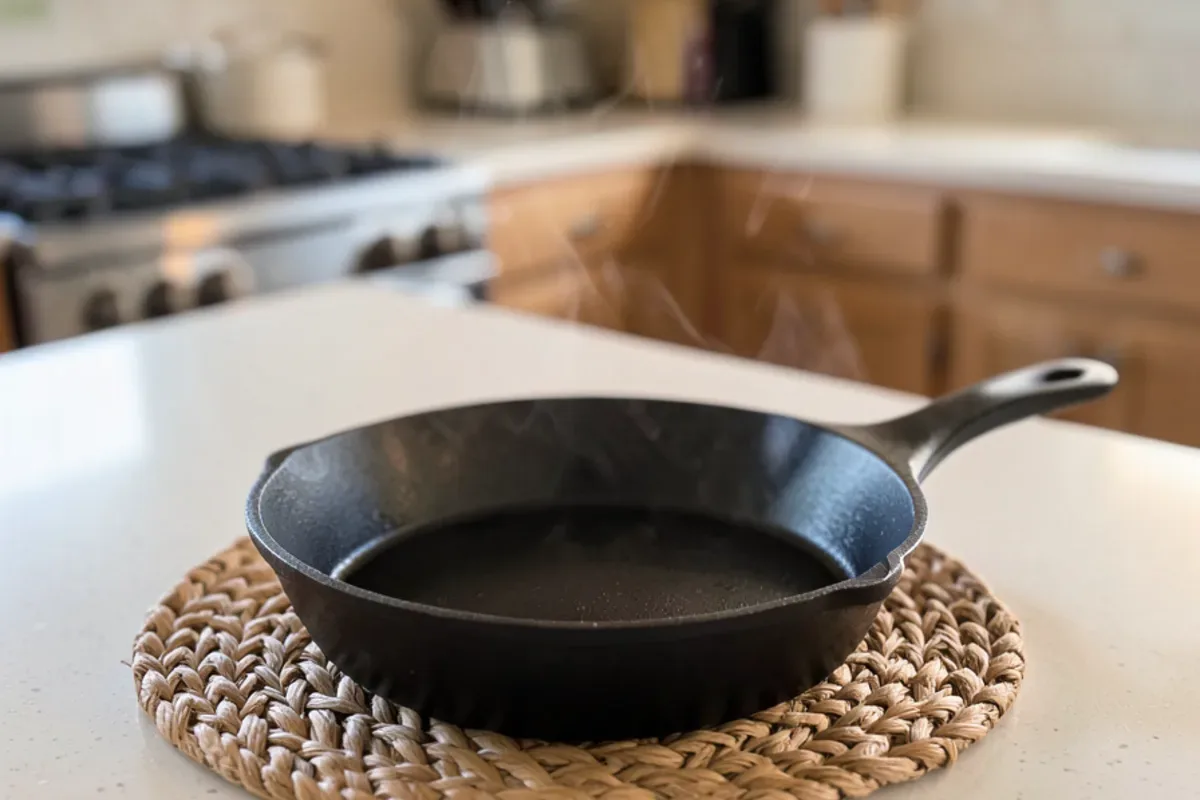
Granite and true quartzite need sealing only when they start to absorb, and how often varies by slab. Some dense stones go years between sealings; more porous slabs need it yearly.
The water test tells you:
- Pour a small puddle of water, about the size of a coaster, in a busy spot such as beside the sink.
- Wait 10 to 15 minutes.
- If the stone darkens under the water, it is absorbing and is ready for sealer. If the water beads and the stone stays the same color, the seal is still working.
To reseal, clean and dry the counter, apply a penetrating stone sealer per its label, let it dwell, then wipe off every bit of excess before it dries. Sealer left on the surface turns hazy.
Stain Removal by Stain Type
The Natural Stone Institute matches the treatment to the stain. These are its recommendations for natural stone such as granite, marble and quartzite:
| Stain | What it looks like | NSI treatment |
|---|---|---|
| Oil-based (cooking oil, grease, milk) | Darker patch in the stone | Poultice of baking soda and water, or powder with mineral spirits |
| Organic (coffee, tea, fruit) | Pinkish-brown spot | 12% hydrogen peroxide with a few drops of ammonia, or a peroxide poultice |
| Rust and iron | Orange to brown | Poultice of diatomaceous earth with a commercial rust remover |
| Copper or bronze | Green or muddy brown | Poultice with ammonia |
| Ink | Lines or blotches | Bleach or peroxide on light stone only; lacquer thinner or acetone on dark stone only |
Peroxide can lighten some stones, so test it in a hidden corner first. The NSI's warning bears repeating: never mix ammonia and bleach, because the combination releases a toxic gas.
How to Apply a Poultice
A poultice is an absorbent powder mixed with a cleaner to roughly the thickness of peanut butter. The NSI method:
- Wet the stain with distilled water.
- Spread the paste about 1/4 to 1/2 inch thick, reaching about an inch past the stain.
- Cover it with plastic and tape the edges to seal it.
- Let it dry for about 24 to 48 hours; drying is what pulls the stain up into the powder.
- Remove, rinse with distilled water and buff dry. Stubborn stains can take up to five rounds.
A Note on "Soft Quartzite"
Some stones sold as quartzite are actually dolomitic marble. They look similar, but they react to acid like marble does. If a vinegar spill leaves a dull mark on your "quartzite," treat it with marble care from then on. Our comparison of quartzite vs marble explains how to test a slab before you buy it.
Marble Countertop Care: Etching vs Staining
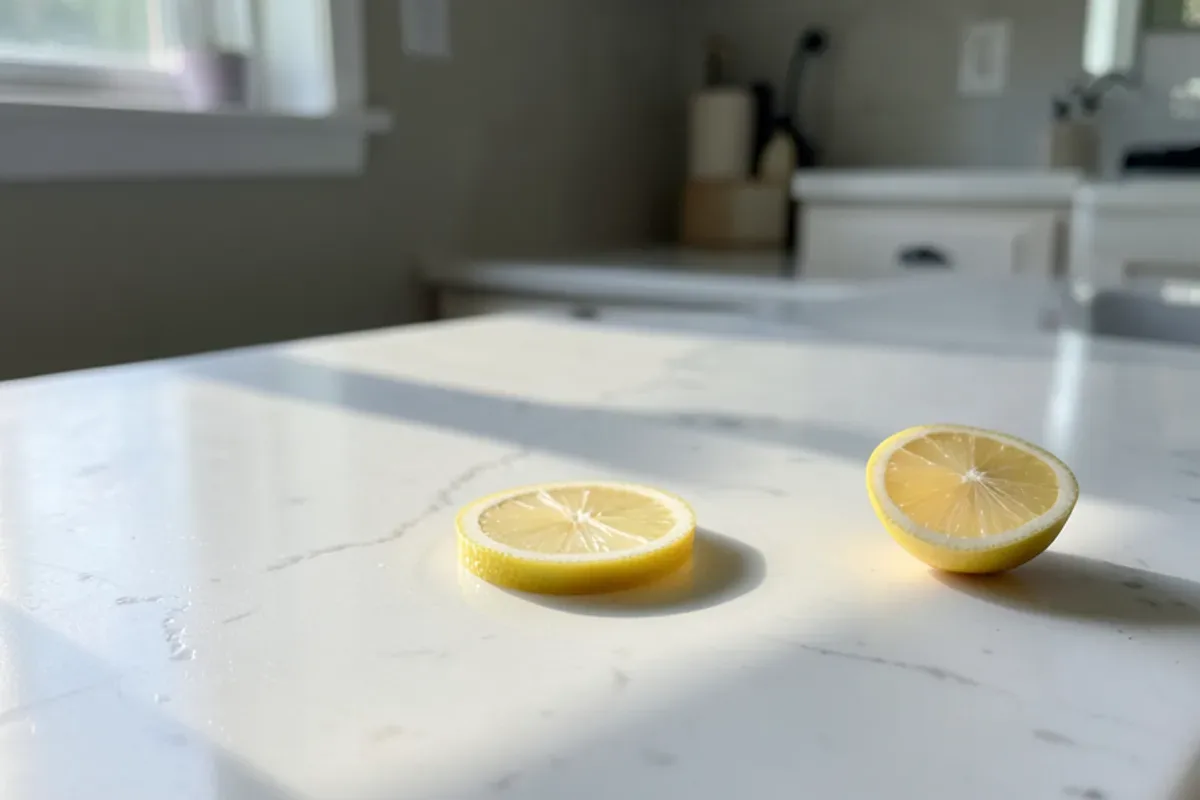
Marble needs the most care because it is made of calcite, which reacts with acid. Lemon juice, wine, tomato sauce, vinegar and many cleaners will etch a dull spot into polished marble within minutes, even when the stone is sealed.
Etching and staining are different problems:
| Problem | Cause | Prevention | Fix |
|---|---|---|---|
| Etch | Acid dissolving the surface | Coasters, cutting boards, quick wipe-ups | Re-polishing or honing |
| Stain | Liquid soaking into pores | Regular sealing | Poultice |
Light etching on polished marble can sometimes be buffed out at home: the NSI suggests wetting the surface and buffing with a marble polishing powder until the shine returns. Deeper etches need a stone restoration professional with honing equipment.
Honed marble hides etching better than polished, because the whole surface is already matte. Many owners also accept a patina over time. Our marble countertops page covers finish choices in more detail.
A Simple Countertop Care Schedule
Put these on a calendar and stone stays in good condition for decades.
| Task | Quartz | Granite | Quartzite | Marble |
|---|---|---|---|---|
| Daily soap and water wipe | Yes | Yes | Yes | Yes |
| Water test | Not needed | Every few months | Every few months | Every few months |
| Sealing | Never | When the test fails | When the test fails | When the test fails, often yearly |
| Acid caution | Moderate | Low | Low | High |
| Trivets for hot pans | Always | Good habit | Good habit | Good habit |
What Our Project Leads See in the Park Cities
Our project leads talk about care with homeowners before the stone is chosen, because the right material depends on how a kitchen is used. In Highland Park, historic 1910s to 1930s homes often call for marble, and the conversation centers on whether owners will enjoy a patina or be bothered by etching. In University Park, around SMU, kitchens enlarged inside tight lots often pair a marble island with a harder perimeter stone that takes daily cooking.
The honest trade-off we explain on every marble job: sealing protects against stains, not etching, and no product makes marble behave like quartz. Owners who love marble tend to treat the marks as part of the stone. Owners who want a counter that looks new in ten years are usually happier with quartzite or quartz. We would rather have that conversation before the slab is cut than after.
Two habits we recommend everywhere:
- Keep a cutting board out by the sink, where lemons and limes get cut.
- Store oils and vinegars on a tray rather than directly on stone.
Keep It Simple
Mild soap daily, a water test now and then, sealer when the stone asks for it, and trivets and cutting boards always. That routine covers every countertop we install. To compare materials or plan new tops, visit our countertops page.
Quick Answers on Countertop Care Guide
Can I use disinfecting wipes on stone countertops?
How do I get a stain out of marble or granite?
Is an etch mark the same as a stain?
How do I remove hard water rings around a stone countertop faucet?
Sources

Written by the Six Design Group team
Design-build remodelers based in Lake Highlands, Dallas. We plan and build kitchens, bathrooms, floors and whole-home remodels across Dallas-Fort Worth.